A CRM pricing page shows you the smallest number it honestly can. That number is usually the annual rate, sometimes a promotional rate that expires after twelve months, and in one case below it is not a CRM price at all. Every figure here is the vendor's own, checked against its pricing page in August 2026, with the billing cycle spelled out so you know what actually leaves your account.
Quick answer
For a freelancer who wants a real CRM at no cost, HubSpot's free plan is the strongest option: 1,000 contacts, email tracking, and a deal pipeline for $0, with no expiration. If you already run your work in Notion, extend what you have instead of adding a tool, and sync the contacts out to your phone. If you want the cheapest paid tool that still handles invoicing and time tracking, that is Moxie at $10/month billed annually.
The rest of the short version:
- Send proposals and contracts? HoneyBook runs the client workflow from inquiry to invoice, at $29/month on annual billing.
- Sell actively and need follow-up nudges? Pipedrive, from $14 per seat per month billed annually.
- Just want contacts organized? Capsule's free plan holds 250 of them with no clutter.
- Live in Gmail? Streak puts a pipeline in your inbox, though the CRM itself starts at $49 per user per month.
Below are eight CRM tools tested for solo use in 2026, each aimed at a different freelancer problem. If you would rather build your own, start with how to build a personal CRM in Notion or a CRM in Google Sheets.
What makes a CRM "freelancer-friendly"?
Enterprise CRMs are built for sales teams of fifty. Freelancers need something different: a tool one person can set up in 30 minutes, maintain without an admin, and afford on variable income.
Five things separate a good freelancer CRM from an enterprise tool that happens to have a free tier:
- One person can buy it: No seat minimum, no sales call to reach the entry tier, no company registration number at checkout. A tool that only sells in blocks of five or ten seats is not a freelancer CRM, however low the per-seat price looks.
- Low maintenance: No dedicated admin. You are the sales team, the account manager, and the bookkeeper. The CRM has to survive weeks where you are too busy delivering work to update it.
- Affordable: Free or under $20/month. Pricing per seat penalizes solo users. Flat pricing or a generous free plan matters.
- Mobile access: Client calls happen outside the office. Contact details, notes, and deal stages need to be on your phone.
- Integrations over features: Freelancers already use a calendar app, an invoicing tool, and an email client. A CRM that connects to those is more useful than one that tries to replace them all.
Do freelancers actually need a CRM?
Not always. If you manage fewer than ten clients, a spreadsheet or a note in your phone works fine.
Once you hit ten to fifteen active relationships, things start slipping. A follow-up email you forgot. A proposal you sent but never tracked. A past client you meant to check in with three months ago. Most businesses that put a CRM in place report a 21% to 30% increase in sales revenue (Salesmate, 2026), and around 71% of small businesses already run one (SLT Creative, 2026).
The freelancer question is not whether CRM works. It is whether the overhead of maintaining one pays back in clients retained and leads followed up on. For most freelancers billing ten or more clients a year, it does.
How we chose these CRMs
We tested each CRM from the perspective of a solo freelancer managing 10-30 clients:
- Buyable by one person: No minimum seat count, no team requirement, and a checkout you can complete alone. Every tool here passed, and where the entry price is steep we say so in the section rather than burying it.
- Free plan or trial available: No commitment required to evaluate.
- Setup time under 30 minutes: If it takes longer, a freelancer will not finish.
- Mobile access: Native app or responsive web that works on a phone.
- Integrations: Connects to calendar, email, and invoicing tools a freelancer already uses.
About the prices below. Every figure comes from the vendor's own pricing page in August 2026, quoted in the currency the vendor bills in. All eight bill in US dollars, so nothing here is converted, and a European or Canadian freelancer will see the exchange rate land on the card each month. Capsule also offers pounds and euros at checkout; Pipedrive lists its prices exclusive of VAT.
Watch the billing cycle, because it is where the advertised number and the number you pay diverge. Pipedrive's $14, Capsule's $18, Moxie's $10, and HoneyBook's $29 are all annual-billing rates that require paying twelve months up front. Pay month to month and every one of them costs more. Promotional rates are flagged where they apply, since those revert on renewal.
Best CRM tools for freelancers at a glance
| CRM | Best for | Price (solo) | Min. seats | Key strength |
|---|---|---|---|---|
| HubSpot CRM | A free full CRM | Free | 1 | Email tracking, deal pipeline |
| HoneyBook | Creative freelancers | From $29/mo (annual) | 1 | Proposals, contracts, invoicing |
| Pipedrive | Active selling | From $14/mo (annual) | 1 | Visual deal pipeline |
| Notion | Full control over structure | Free | 1 | Custom fields and views |
| Moxie | Running the whole business | From $10/mo (annual) | 1 | Time tracking and invoicing |
| Bloom | Client work on the side | From $14/mo (monthly) | 1 | Client portal, booking page |
| Capsule CRM | Simple contact management | Free | 1 | Clean UI, 60+ integrations |
| Streak | Working inside Gmail | From $49/mo (annual) | 1 | CRM inside Gmail |
Prices are the lowest published rate per vendor, which for most means annual billing. No tool here imposes a seat minimum, so the solo price is the real price.
1. HubSpot CRM: best free CRM for freelancers
| Platforms | Price |
|---|---|
| Web, iOS, Android | Free / Starter $20 per seat/mo |
✅ Pros:
- Free plan holds up to 1,000 contacts and companies, plenty for a solo freelancer.
- Email tracking with open and click notifications.
- Built-in meeting scheduler and live chat.
- Deal pipeline with drag-and-drop stages.
- Integrates with Gmail, Outlook, Google Calendar, and hundreds of other tools.
❌ Cons:
- Free plan limits you to one deal pipeline.
- Paid plans jump to $20/month per seat, which adds up fast if you ever hire.
- The interface has an enterprise feel that can be overwhelming for a solo business.
HubSpot's free CRM is genuinely free, not a 14-day trial that nags you into upgrading. You get up to 1,000 contacts, email tracking, a deal pipeline, and a meeting scheduler at no cost. For a freelancer who wants to track leads and client conversations without paying anything, this is the strongest option, and 1,000 records is far more than most solo businesses ever fill.
The email tracking alone justifies the setup. When you send a proposal, HubSpot tells you when the client opened it, how many times they looked at it, and which links they clicked. That information changes how and when you follow up.
Where HubSpot gets heavy
The free plan works well for contact and deal tracking, up to its 1,000-contact and two-user ceiling. The moment you want marketing automation, custom reports, multiple pipelines, or to push past that contact cap, you hit the paywall.
Starter lists at $20 per seat per month. HubSpot is currently running a limited-time new-customer discount that drops the entry rate as low as $7 per seat per month on annual billing ($10 paying monthly), so check the pricing page before you assume $20, and remember that promotional rates revert at renewal. For a freelancer who just needs to know "who should I follow up with today," the free tier is more than enough and the question does not arise.
2. HoneyBook: best for creative freelancers
| Platforms | Price |
|---|---|
| Web, iOS, Android | Starter $29/mo / Essentials $49/mo (annual) |
✅ Pros:
- Proposals, contracts, and invoicing in one workflow.
- Automated client booking with online scheduling.
- Payment processing built in (credit card and bank transfer).
- Templates for proposals, contracts, and questionnaires.
❌ Cons:
- No free plan. 30-day free trial only (no credit card required).
- Overkill if you just need contact management.
- Card processing fees start at 2.7% + 10¢ per transaction on top of the subscription.
HoneyBook is not a CRM in the traditional sense. It is a client management platform that covers the full lifecycle: inquiry, proposal, contract, invoice, payment. For creative freelancers who send proposals and contracts regularly, having all of that in one place eliminates the patchwork of separate tools.
The three plans run $29, $49, and $109 a month on annual billing, and the two upper tiers currently show a 25% discount against list prices of $59 and $129. Payments carry their own cost regardless of plan: card processing starts at 2.7% + 10¢, and ACH bank transfers run 1.5%. On a $4,000 project that is roughly $108 by card or $60 by bank transfer, which is worth doing the arithmetic on before you route invoices through it.
The automation features save real time. You can set up a workflow where a new inquiry triggers a questionnaire, which triggers a proposal, which triggers a contract, all without manual steps between each stage.
When HoneyBook is too much
If you do not send proposals or contracts (for example, you are a freelance developer who works on retainers), HoneyBook's core value proposition does not apply. You would be paying $29/month for CRM features that HubSpot offers for free.
3. Pipedrive: best for sales-focused freelancers
| Platforms | Price |
|---|---|
| Web, iOS, Android | Lite $14 / Growth $39 per seat/mo (annual) |
✅ Pros:
- Visual pipeline that makes deal stages obvious at a glance.
- Email sync with Gmail and Outlook (two-way).
- Activity reminders so follow-ups do not slip.
- Revenue forecasting based on deal probability.
- Marketplace with 500+ integrations.
❌ Cons:
- No free plan. 14-day trial only, though it needs no credit card.
- The $14 rate requires paying twelve months up front.
- No invoicing built in (you need a separate tool like Xero or QuickBooks).
- Per-seat pricing adds up if you bring on a subcontractor.
Pipedrive was built for salespeople, and it shows. The visual pipeline, where you drag deals from stage to stage, gives you a clear picture of where every prospect stands. For a consultant or freelancer who actively sells their services (cold outreach, proposals, closing calls), that clarity earns its place.
Read the price carefully. Lite is $14 per seat per month billed annually, which Pipedrive charges as a single payment of $168 per seat per year. Growth is $39 on the same terms, and both cost more if you pay monthly. Prices are quoted exclusive of VAT, so European freelancers should expect their national rate on top.
The activity system is what keeps deals moving. Pipedrive nags you when a deal has no next step scheduled. That one feature prevents the most common freelancer failure mode: sending a proposal and then forgetting to follow up.
Pipedrive vs HubSpot for freelancers
Both track contacts and deals. Pipedrive's interface is simpler and more focused on the pipeline. HubSpot's free plan is hard to beat on price. If you sell actively and want a tool that pushes you to follow up, Pipedrive is the better fit. If you want a free CRM to organize contacts, HubSpot wins.
4. Notion: best custom CRM for Notion users
| Platforms | Price |
|---|---|
| Web, Windows, Mac, iOS, Android | Free / Plus $10 per member/mo (annual) |
✅ Pros:
- Build any CRM structure you want: custom fields, views, formulas, relations.
- Combine CRM with project management, notes, and invoicing in one workspace.
- Free templates available, including our Circles of Trust personal CRM template.
- No per-contact limits on the free plan.
- Works on every platform: desktop, mobile, and web.
❌ Cons:
- Requires initial setup. This is not a plug-and-play CRM.
- No built-in email tracking or pipeline automation.
- Contacts do not sync to your phone natively.
Notion databases have every ingredient a CRM needs: custom properties for deal stage, contact info, last interaction date, and follow-up reminders. A solo workspace on the free plan gets unlimited pages and blocks, so the CRM itself costs nothing, and the block limit only appears once you add a second member. Plus is $10 per member per month billed annually ($12 billed monthly) if you want longer page history and larger file uploads. If you would rather not start from a blank page, our best Notion CRM templates roundup collects structures you can duplicate in a click.
The tradeoff is setup time. A dedicated CRM like HubSpot works in ten minutes. A Notion CRM takes an afternoon to build, but once it is running, you have a system that fits exactly how you work instead of how someone else's software thinks you should work.
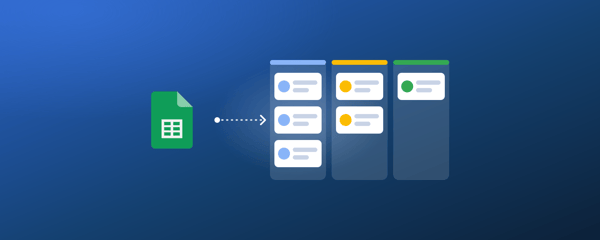
If your client list is already a Google Sheet, the afternoon gets shorter. You can connect that sheet to a Notion database so each column becomes a property and edits flow both ways, without retyping a single client.
Getting contacts on your phone
The one thing Notion cannot do natively is push your CRM contacts to your phone's address book. If you need client names and numbers on hand when you are away from your desk, this is where syncing pays off: 2sync keeps a Notion database and your Google Contacts or Outlook Contacts in two-way sync, so a client you add in Notion shows up on your phone automatically (here is how to sync Notion with Google Contacts). Plans start at $9/month, or $7/month billed annually.
That is how one creative consultant replaced a stack of standalone CRM tools with a single Notion workspace, folding Google Contacts, Calendar, and Tasks into one client database. If you run on Microsoft instead, our Outlook contact management guide walks through the same setup.
Turn Notion into a CRM your phone can see
Two-way sync between your Notion contacts database and Google or Outlook Contacts. 14-day free trial.
5. Moxie: best all-in-one freelance platform
| Platforms | Price |
|---|---|
| Web, iOS, Android | Starter from $10/mo / Pro from $20/mo (annual) |
✅ Pros:
- The cheapest paid tool in this roundup at $10/month billed annually.
- CRM, proposals, contracts, invoicing, time tracking, and accounting in one platform.
- Built-in scheduling tool for client bookings.
- Expense tracking and tax categorization.
- Client portal where clients can view invoices and project status.
❌ Cons:
- No free plan. 14-day trial only.
- CRM features are thinner than dedicated tools like HubSpot or Pipedrive.
- Can feel overwhelming with so many modules.
Moxie (formerly Hectic) tries to be the only tool a freelancer needs. CRM, project management, invoicing, time tracking, proposals, contracts, accounting: it is all in one dashboard. If you are currently juggling four or five separate tools, consolidating to Moxie simplifies the stack.
It is also the lowest paid entry point here. Starter is $12/month paid monthly, or $10/month billed annually at $120 for the year. Pro is $25 monthly or $20 annually, and Teams covers up to five people at $40 monthly or $32 annually. Moxie is explicit that it does not lock you into the annual term, which matters when freelance income arrives unevenly.
The accounting features are what set Moxie apart from other all-in-one platforms. Automatic expense categorization and tax estimates mean less work at year-end. For freelancers in the US, that alone can justify moving up to Pro.
When to choose Moxie over separate tools
If you spend more time switching between apps than doing client work, Moxie pays for itself in time saved. If you already have tools you like for invoicing and time tracking, adding Moxie creates overlap, and the CRM alone is not strong enough to justify the switch.
6. Bloom: best for client work on the side
| Platforms | Price |
|---|---|
| Web, iOS, Android | Side Jobs $14/mo / Solo Business $34/mo (monthly) |
✅ Pros:
- Client portal included on all plans.
- Proposal and contract templates.
- A booking page clients can pay through directly.
- Clean, modern interface that is easy to learn.
❌ Cons:
- No free plan, and the trial is only 7 days.
- The headline $7 is a promotional rate that doubles after twelve months.
- The entry plan caps you at 3 active projects and 1 workflow, and charges a 1.5% platform fee on payments.
- Smaller ecosystem, fewer third-party integrations.
Bloom sells itself on the plan name: Side Jobs, for people whose client work sits alongside something else. It covers contact management, invoicing, a booking page, and a client portal, and the interface is genuinely pleasant.
The pricing needs care. Bloom advertises $7/month, but the list price is $14/month and the $7 is a 50% discount that applies to the first twelve months of a monthly subscription. Choose the yearly toggle instead and Bloom currently offers six months free rather than that rate. Either way, budget for $14/month from year two. Solo Business lists at $34/month and lifts the project, workflow, and automation caps, and Small Teams lists at $66/month.
Two other numbers matter on the entry plan. The free trial is 7 days, shorter than every other paid tool here, and Side Jobs charges a 1.5% platform fee on card and ACH payments that the higher plans do not.
Bloom vs HoneyBook
Both target creative freelancers with proposals, contracts, and invoicing. HoneyBook is more mature, with deeper automation and a larger user community. Bloom is simpler and starts at half the price. If your client work is a side income and you want a professional-looking portal without a large monthly line item, Bloom is the pragmatic choice. If client volume is your main income, HoneyBook's automation saves more time than the price difference costs.
7. Capsule CRM: best for simple contact management
| Platforms | Price |
|---|---|
| Web, iOS, Android | Free (250 contacts) / Starter $18 per user/mo (annual) |
✅ Pros:
- Free plan with up to 250 contacts, permanently.
- Clean, distraction-free interface.
- 60+ integrations including Xero, QuickBooks, Mailchimp, Gmail, and Office 365.
- Task management tied to contacts and deals.
- 14-day trial of the paid tiers with no card required.
❌ Cons:
- Free plan caps at 250 contacts, 5 custom fields, and 1 pipeline.
- No invoicing, proposals, or contracts.
- Limited customization compared to flexible tools like Notion.
Capsule strips CRM down to its core: contacts, companies, opportunities, and tasks. There is no invoicing module, no proposal builder, no project management layer. If you want a CRM that does one thing well, which is keeping your contacts organized and your follow-ups on track, Capsule does it with minimal friction.
The integrations are where Capsule earns its keep for freelancers. Connect it to Xero or QuickBooks for invoicing, Google Workspace for email and calendar, and Mailchimp for newsletters. Each tool does its job. Capsule ties the contact data together.
Is 250 contacts enough?
For most freelancers, yes. You are tracking active clients, warm leads, and key contacts, not a marketing list of thousands. The free plan also allows a second user, which is enough if you work with a regular collaborator.
If you outgrow 250, Starter is $18 per user per month billed annually and lifts the cap to 30,000 contacts, and Growth at $36 doubles that again while adding automations and project boards. Paying month to month raises Starter to $21. Capsule quotes in dollars, pounds, or euros, so European freelancers are not exposed to the exchange rate here.
8. Streak: best Gmail-native CRM
| Platforms | Price |
|---|---|
| Gmail (Chrome extension), iOS, Android | Free email tools / Pro $49 per user/mo (annual) |
✅ Pros:
- CRM built directly into Gmail. No separate app to learn.
- Pipeline view inside your inbox.
- Free, forever email tools: tracking (opens, link clicks), snippets, and mail merge.
- Unlimited records on the paid CRM plans.
❌ Cons:
- Only works with Gmail. No Outlook support.
- No standalone web or desktop app outside of Gmail.
- No free CRM tier anymore; the full pipeline CRM starts at $49/user/month.
Streak turns Gmail into a CRM. Install the Chrome extension, and pipeline columns appear alongside your inbox. Deals, contacts, and tasks all exist inside the email client you already have open all day.
For freelancers whose client communication happens almost entirely over email, Streak eliminates the "I'll update the CRM later" problem. There is no later. The CRM is the inbox.
What you get free, and where the paywall sits
Streak phased out its free CRM pipeline. What stays free forever is the set of Gmail power tools: email and link tracking, snippets, mail merge (50 sends a day), Streak Share, and thread splitting. Those alone are useful if all you need is to see when a proposal gets opened.
The pipeline CRM, shared contacts, and unlimited records now start on the Pro plan at $49 per user per month billed annually, or $59 paid monthly. Pro+ is $69 annually ($89 monthly) and Enterprise $129 ($159 paying monthly).
Say the constraint plainly: $49/month is the most expensive entry point in this roundup, more than triple Pipedrive's and well outside the $0-20 range most freelancers budget for a CRM. One person can buy it, with no seat minimum and no sales call, so it stays on the list. But if the appeal was the word "free" in a comparison table, the free tier is email tooling, not a CRM. For a tracked deal pipeline at no cost, HubSpot's free plan is the stronger pick, and Streak earns its price only when Gmail genuinely is your entire sales process.
How to choose the right CRM for your freelance business
The right CRM depends on what kind of freelancing you do and which tools you already use.
Which CRM fits your freelance work?
- Creative freelancers (design, photography, video): HoneyBook if client work is your main income, Bloom if it runs alongside a job. Both build proposals and contracts into the CRM.
- Consultants and coaches: Pipedrive or HubSpot. You need pipeline visibility to track leads through stages, and email tracking to time your follow-ups.
- Developers and tech freelancers: Notion or Capsule. You want flexibility and clean data without paying for features you do not use.
- Writers and content creators: HubSpot Free or Streak's free Gmail tools. Lightweight, email-centric tools that track conversations without adding complexity.
- Multi-service solopreneurs: Moxie. One platform that covers CRM, invoicing, time tracking, and accounting, at the lowest paid price here.
Which one should you actually pick?
Eight tools is a shortlist, not a decision. Three rules get most freelancers to an answer in a few minutes.
- Start free unless you have a reason not to. HubSpot gives you 1,000 contacts, a deal pipeline, and email tracking at no cost, with no expiration date and no card. Capsule's free plan is the calmer alternative if 250 contacts covers your world and you want less software on screen. Neither will ask you for money before you have decided whether the habit sticks.
- If you already run your work in Notion, extend it rather than adding a tool. The database you need is a few properties away from what you already have, and it costs nothing on a solo workspace. The one thing Notion cannot do is put those contacts in your phone's address book, which is a solvable problem rather than a reason to buy a second CRM.
- Pay only when the CRM has to do a job Notion or HubSpot cannot. That job is usually sending contracts and collecting money. HoneyBook and Bloom do it for creative work, Moxie does it alongside time tracking and tax categories for $10/month, and Pipedrive does it for people whose work is genuinely selling.
Whatever you choose, check the billing cycle before you check out. Four of the eight advertise a rate you only get by paying a year up front, and one of them advertises a promotional rate that doubles in month thirteen.
If Notion won the decision, the gap worth closing is phone access. 2sync keeps your Notion contacts database and Google or Outlook Contacts in two-way sync, so a client you add at your desk is on your phone before you leave it.
Sync your Notion CRM with your phone contacts
2sync connects Notion with Google or Outlook Contacts, so every client detail stays updated across your workspace and phone automatically.
FAQ
Is a free CRM good enough for freelancers?
For most, yes. HubSpot's free plan handles up to 1,000 contacts and two users, a deal pipeline, and email tracking, with no expiration date. You only need to upgrade when you want automation, multiple pipelines, custom reporting, or more than 1,000 contacts. Capsule offers a functional free CRM tier (250 contacts, two users), and Streak's free Gmail tools cover email tracking and mail merge, though not a pipeline. Notion's free plan also works as a CRM for a solo workspace.
Can I use Notion as a CRM?
Yes. A Notion database with properties for contact info, deal stage, last contact date, and notes functions as a CRM. The missing piece is phone access: a sync tool like 2sync can connect your Notion contacts two-way with Google or Outlook Contacts, so client details are always on your phone.
What is the easiest CRM to set up?
Streak, because it installs as a Gmail extension with no separate account to configure. HubSpot Free is a close second with guided onboarding that walks you through creating your first pipeline.
Do I need a CRM if I only have a few clients?
Not necessarily. Below ten active clients, a spreadsheet or a simple notes app works. A CRM becomes valuable when you are juggling ten to fifteen relationships and follow-ups start slipping through the cracks.
How much should a freelancer spend on CRM?
$0-20/month is the realistic range. Free plans from HubSpot and Capsule cover the basics, and Streak's free Gmail tools handle email tracking. Among paid tools, Moxie is the cheapest at $10/month billed annually ($12 monthly), followed by Pipedrive Lite at $14 per seat per month billed annually and Bloom Side Jobs at $14/month. Above that band you are paying for client-facing workflow rather than contact management: HoneyBook at $29/month, and Streak's pipeline CRM at $49 per user per month.
Which CRMs only advertise their annual price?
Most of them, so read the billing toggle before you commit. Pipedrive's $14, Capsule's $18, Moxie's $10, and HoneyBook's $29 all require paying twelve months up front, and each costs more month to month. Bloom is a separate case: its $7 is not an annual rate at all but a 50% promotional discount on monthly billing that reverts to the $14 list price after twelve months. HubSpot is currently discounting Starter for new customers against a $20 per seat list price. None of these are hidden, but none of them are the number you see first either.